Ficus whitefly infestations in Southwest Florida produce canopy thinning within two to three weeks of initial colonization. In communities such as Port Royal, Aqualane Shores, and Old Naples, mature Ficus benjamina…
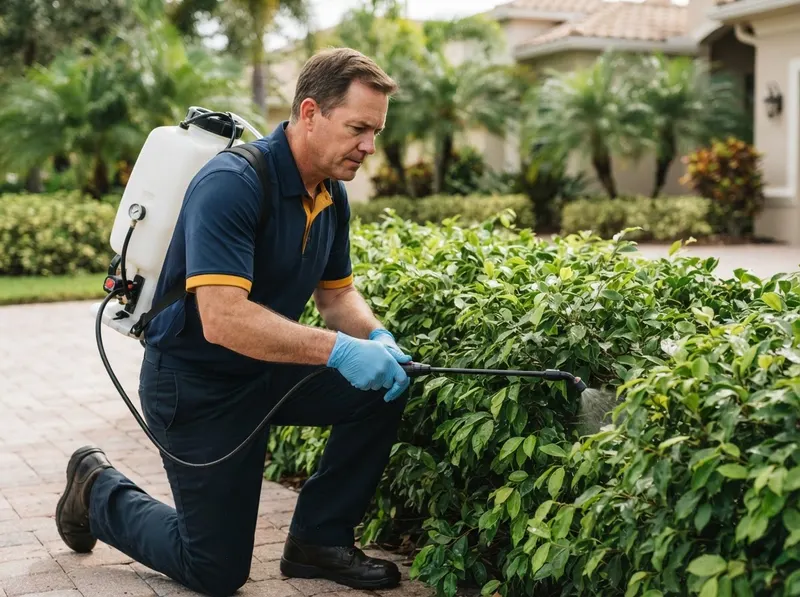
Ficus whitefly infestations in Southwest Florida produce canopy thinning within two to three weeks of initial colonization. In communities such as Port Royal, Aqualane Shores, and Old Naples, mature Ficus benjamina hedges form structural perimeter borders reaching 12 to 20 feet in height. When nymph populations cluster along leaf undersides, their piercing-sucking mouthparts deplete vital plant sap, triggering premature leaf drop and leaving branch frameworks entirely bare. A targeted systemic shield delivers active neonicotinoid or diamide compounds directly into the vascular xylem via calibrated basal soil drenches, distributing active protection upward into every leaf tip without airborne drift onto nearby water bodies or outdoor travertine decking.
Selecting a systemic root shield versus a contact topical spray represents an essential decision based on hedge scale and proximity to sensitive marine ecosystems. Contact horticultural oils and soaps suppress active adult populations instantly on accessible low growth near Lowdermilk Park or Baker Park, yet surface sprays fail to penetrate dense, 15-foot foliage canopies and rinse away under coastal afternoon rainstorms. The systemic soil injection approach moves upward through root absorption, delivering 120 to 180 days of residual control against newly hatched nymphs; the trade-off is an initial 2-week vascular uptake window before maximum control occurs. Estate properties bordered by the Gulf or sensitive waterways benefit because soil applications eliminate broad chemical atomization around screened lanai enclosures and ornamental water features.
Properties in Pelican Bay, The Moorings, and Coquina Sands face secondary damage from rugose spiraling whiteflies, which coat broadleaf plants, coconut palms, and Caloosa hedges in sticky honeydew. This sugary excretion generates thick black sooty mold that blocks sunlight and permanently stains shell-stone paving, pool copings, and outdoor furniture. In inland parcels across Tiburon, Lely Resort, and multi-acre tracts in Golden Gate Estates, treatment volume scales to hedge density and soil composition, as porous coastal sand requires higher irrigation management to hold systemic active agents within the feeder-root zone (the upper 6 to 12 inches of soil). Numbered protocols provide clear execution: 1. Core aeration and root-collar assessment to locate active feeder roots. 2. Calibrated systemic drench calibrated to trunk caliper and linear footage. 3. Low-pressure foliar rinse to strip existing sooty mold and honeydew deposits.
Every job gets a firm, written price after a free on-site visit.
Tell us about your ficus and whitefly shrub shield job in Naples and we'll send a clear, written quote, usually the same day.
 Honeycomb Pest Control