Screened pool cages and outdoor living areas face constant pressure from micro-insects in Southwest Florida. Subtropical humidity combined with dense surrounding foliage creates an ideal corridor for ghost ants and…
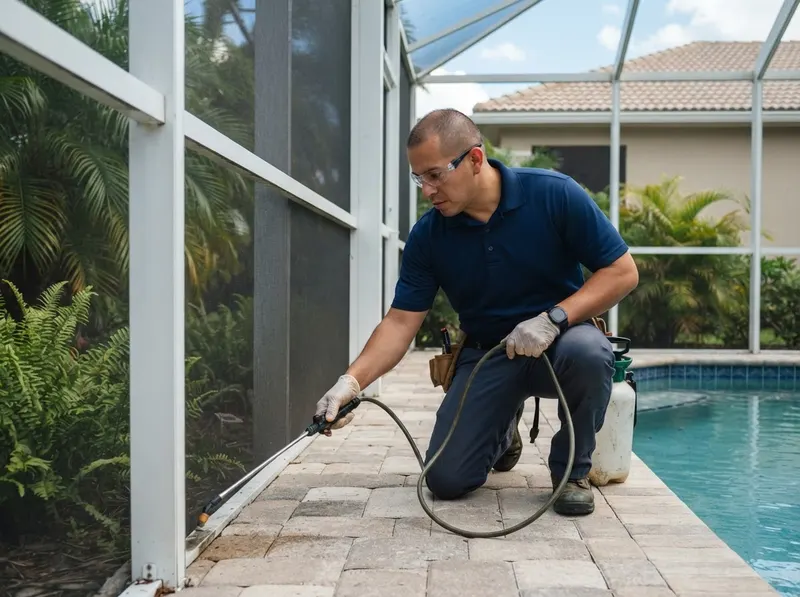
Screened pool cages and outdoor living areas face constant pressure from micro-insects in Southwest Florida. Subtropical humidity combined with dense surrounding foliage creates an ideal corridor for ghost ants and spiders to nest directly inside the hollow extrusions of architectural aluminum frames. A lanai barrier defense differs from standard interior pest control by focusing exclusively on structural transition zones: the perimeter kick-plates, overhead beam intersections, anchor bolts, and expansion joints where travertine pool decks meet outer landscaping. Standard broad-spectrum liquid sprays can leave white residue on bronze frames or degrade screen tension splines over time. In contrast, coastal barrier defense utilizes low-drift, micro-encapsulated suspensions that bond to non-porous powder-coated aluminum while resisting rainfall and saltwater air breakdown.
Properties situated along canals in Aqualane Shores, Port Royal, and the bay corridors of Pelican Bay and The Moorings experience elevated populations of Leptoconops biting midges and spiders that exploit standard 18x14 mesh screens. A structured chemical and physical enclosure defense provides reliable exclusion, whereas standard retail aerosol treatments wash off during summer afternoon downpours or leave greasy film on natural limestone decking. In Golden Gate Estates and rural residential parcels where standing water and unmanaged brush border properties, exterior barrier bands must frequently extend to surrounding sod lines and landscape uplighting fixtures to intercept nocturnal crawling insects before they access lanai door tracks.
Implementing this service requires evaluating the layout of pool filtration equipment, outdoor summer kitchens, and adjoining roof gutters. Step one involves clearing surface webbing and mud dauber tubes using non-abrasive pole brushes. Step two establishes a precision micro-barrier along the outer baseplates, footer anchoring points, and under-rail gaps where pavers meet the enclosure footing. Step three treats perimeter shrub beds within 3 to 5 feet of the screen cage to suppress nesting ghost ant colonies before foraging workers trail along screen frame lines. If an enclosure features fine 20x20 no-see-um mesh, treatment focuses heavily on horizontal support ribs and door thresholds where flying pests harbor during wind shifts.
Every job gets a firm, written price after a free on-site visit.
Tell us about your lanai and pool enclosure barrier defense job in Naples and we'll send a clear, written quote, usually the same day.
 Honeycomb Pest Control